Dedicated Developers vs Freelancers- Which Is Better for Long-Term Projects in 2026?
- February 3, 2026
- 11 mins
- 1.4k


Deciding how to build software is no longer just about saving money. It also determines in 2026 how stable your project is, how quickly it grows, and how easily it gets delivered.
Today’s software is more complex. It is powered by AI, changes frequently and requires frequent updating.
Because of this, many companies ask the same question:
Should we hire freelancers or should we build a dedicated development team for long-term work?
Both options can work in the right situation. But choosing the wrong one can lead to delays, weak code, frequent team changes and higher costs over time.
In this article we answer the question what is the difference between dedicated developers and freelancers in a simple and understandable manner. We address cost, team work, growth, risks and long-term results so you can make the proper decision for your 2026 product plans.
Why This Decision Matters More in 2026
Long-term software development in 2026 looks very different from even three years ago.
Projects today are-
- AI-integrated and data-driven
- Continuously iterated, not “one-and-done”
- Expected to scale faster with smaller margins for error
- Dependent on deep product understanding and system ownership
This shift has made long-term software development hiring a strategic decision rather than a tactical one.
Let’s understand the two most common models shaping this decision.
What Is a Freelancer Model?
A freelancer is an independent professional hired on a task-based, hourly, or short-term contract basis.
Common Use Cases for Freelancers
- One-time feature development
- Bug fixes or maintenance tasks
- UI/UX design work
- Content, QA, or testing support
- MVP experimentation
Freelancers are usually sourced from platforms like Upwork, Toptal, Fiverr, Developerspool or through referrals.
What Is a Dedicated Developer or Dedicated Team Model?
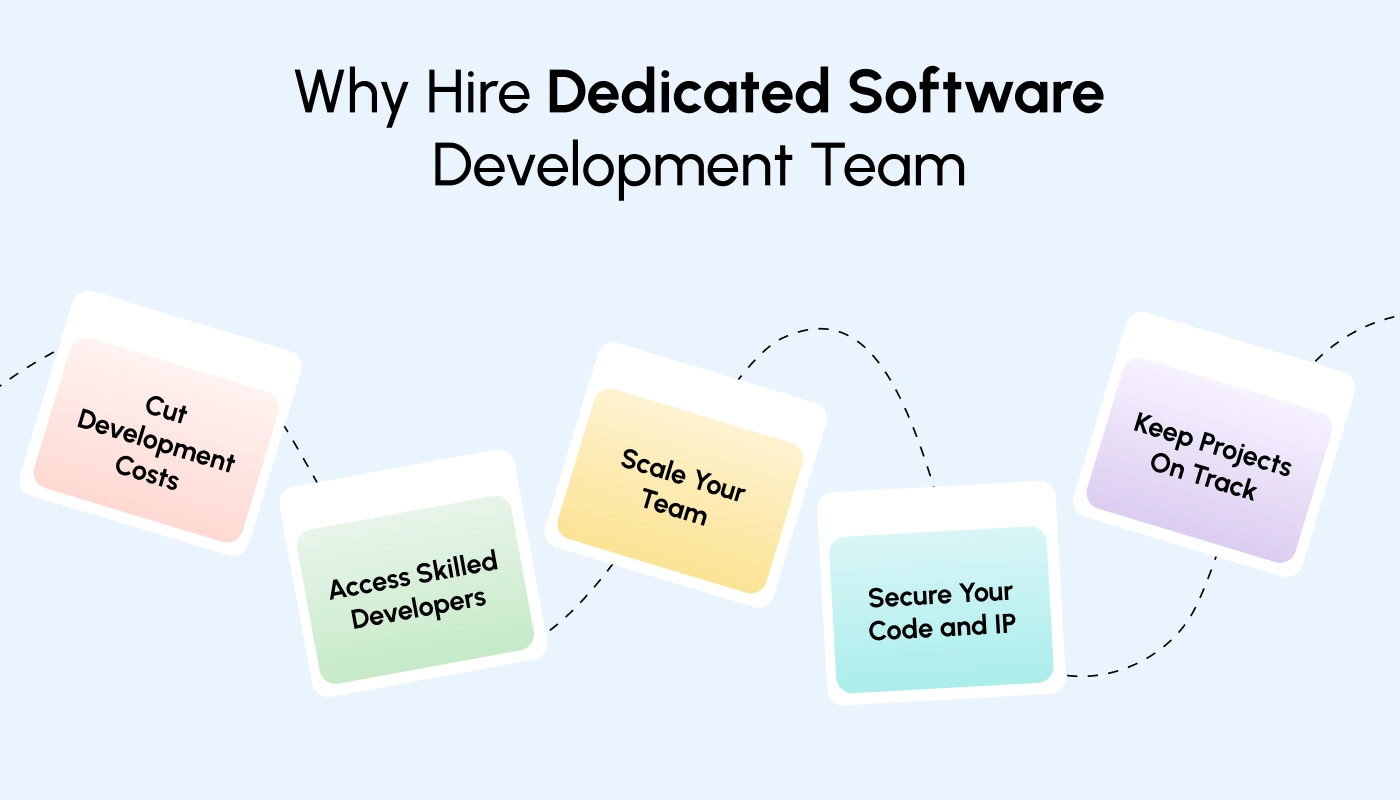
A dedicated development team consists of developers who work exclusively on your project over a long period, typically through a development partner or staffing company.
You get-
- Full-time developers
- Consistent availability
- Aligned working hours
- Long-term commitment
- Team continuity
This model is commonly used when businesses hire dedicated developers for long-term projects that require stability, scalability and ownership.
Difference Between a Dedicated Developer and a Freelancer
When choosing a hiring model for software development, it’s important to understand how dedicated developers and freelancers differ in terms of commitment, involvement & long-term value.
The table below highlights the key differences between dedicated developers and freelancers–
| Aspect | Dedicated Developer | Freelancer |
|---|---|---|
| Work Engagement | Works full-time on a single project | Works on multiple projects at once |
| Project Duration | Long-term involvement | Short-term or task-based |
| Availability | Fully available during working hours | Availability depends on workload |
| Commitment Level | High commitment to project success | Limited to assigned tasks |
| Product Understanding | Deep understanding of business and product | Basic understanding of task scope |
| Communication | Regular communication and meetings | Limited, task-based communication |
| Accountability | Responsible for long-term outcomes | Focused on task completion |
| Scalability | Easy to scale team size as needed | Difficult to scale consistently |
| Best Use Case | Ongoing, evolving software projects | Small, isolated development tasks |
Dedicated Developers vs Freelancers- A High-Level Comparison
Before diving deep, here’s a quick snapshot-
| Aspect | Freelancers | Dedicated Developers |
| Engagement | Short-term | Long-term |
| Commitment | Project-based | Full-time |
| Product Ownership | Low | High |
| Scalability | Limited | High |
| Collaboration | Transactional | Embedded |
| Best For | Small tasks | Ongoing development |
Now let’s unpack this in detail.
1. Project Continuity & Knowledge Retention
Freelancers
Freelancers typically work on isolated tasks, not evolving systems. Once the task is done, they move on.
This creates challenges such as-
- Knowledge loss when freelancers exit
- Repeated onboarding for new freelancers
- Inconsistent coding patterns
- Limited accountability for long-term outcomes
Over time, this leads to fragmented architecture and technical debt.
Dedicated Developers
Dedicated developers grow with your product. They understand-
- Your business logic
- User personas
- Technical decisions and tradeoffs
- Long-term product vision
This continuity is critical when you hire developers for long-term projects that require iteration, optimization & scaling.
Winner for long-term projects- Dedicated developers
2. Cost Comparison- Freelancers vs Dedicated Developers Cost in 2026
At first glance, freelancers may seem cheaper. But the real cost picture in 2026 tells a different story.
Freelancer Cost Reality
While freelancers may charge lower hourly rates-
- Multiple freelancers are often needed over time
- Hidden costs arise from rework and misalignment
- Delays increase opportunity cost
- Quality inconsistencies require fixes
What looks affordable initially can become expensive over months.
Dedicated Development Team Cost
A dedicated team offers-
- Predictable monthly costs
- Higher productivity per developer
- Fewer handoffs and rework
- Faster execution due to familiarity
When evaluating freelancers vs dedicated developers cost, dedicated teams often provide better ROI for projects lasting 6+ months.
Winner for cost efficiency over time- Dedicated developers
3. Scalability and Growth Readiness in 2026
Freelancers
Scaling with freelancers is difficult because-
- Availability is uncertain
- Each new hire requires fresh onboarding
- Team cohesion is minimal
- Skill gaps appear as scope grows
This makes freelancers less suitable for evolving products.
Dedicated Developers
Dedicated teams are designed for scalable development teams in 2026.
You can-
- Add or remove developers easily
- Introduce specialists when needed
- Maintain consistent velocity
- Scale without disrupting workflows
This flexibility is crucial for startups, SaaS platforms & enterprises planning growth.
Winner for scalability- Dedicated development teams
4. Collaboration, Communication & Ownership
Freelancers
Freelancers usually-
- Work asynchronously
- Focus on assigned tasks only
- Have limited involvement in planning
- Lack accountability beyond deliverables
This transactional relationship often impacts collaboration.
Dedicated Developers
Dedicated developers function like an extension of your in-house team.
They-
- Participate in sprint planning
- Contribute ideas and improvements
- Take ownership of outcomes
- Collaborate closely with product managers and stakeholders
This is especially valuable in complex products where proactive problem-solving matters.
Winner for collaboration- Dedicated developers
5. Security, Compliance & IP Protection
In 2026, security and compliance are non-negotiable.
Freelancer Risks
- Multiple independent contractors handling sensitive data
- Varying security practices
- IP ownership risks across jurisdictions
- Limited legal accountability
Dedicated Team Advantages
When working with a dedicated team via a professional partner-
- NDAs and contracts are standardized
- Security protocols are enforced
- IP ownership is clearly defined
- Compliance requirements are supported
This makes dedicated teams safer for enterprise and regulated industries.
Winner for security and compliance- Dedicated development teams
6. Speed, Quality & Technical Consistency
Freelancers
Freelancers may deliver fast for small, defined tasks, but-
- Code quality varies
- Architecture decisions lack long-term thinking
- Integration issues surface later
Dedicated Developers
Dedicated teams-
- Follow consistent coding standards
- Make architecture decisions with future scale in mind
- Optimize performance over time
- Reduce long-term technical debt
Quality compounds positively with a stable team.
Winner for long-term quality- Dedicated developers
7. Remote Developers vs Freelancers- The 2026 Perspective
Remote work is now standard but remote developers vs freelancers is still a key distinction.
Remote dedicated developers-
- Work full-time on your project
- Align with your time zone and processes
- Are managed like internal staff
Freelancers-
- Split time across multiple clients
- Prioritize availability over alignment
- Operate independently
Remote does not mean freelance. Dedicated remote teams offer structure without location constraints.
8. Software Development Staffing Models Explained
In 2026, companies typically choose from these software development staffing models–
- Freelance Model – Best for short-term tasks
- In-House Hiring – Best for core internal products
- Dedicated Team Model – Best for long-term, scalable projects
- Hybrid Model – Dedicated team + freelancers for niche tasks
For most growing companies, the dedicated team vs freelance model offers the best balance of cost, control & speed.
When Freelancers Still Make Sense
Freelancers are not “bad” they’re just context-specific.
Freelancers work well when-
- Scope is small and fixed
- Work is non-core
- Speed matters more than continuity
- Budget is extremely constrained
They are best used as support, not the backbone of long-term development.
When You Should Hire Dedicated Developers for Long-Term Projects
You should strongly consider a dedicated team if-
- Your project spans 6–12+ months
- You expect continuous feature updates
- Product quality and scalability matter
- You want predictable delivery
- You plan to grow or pivot
This approach aligns perfectly with long-term software development hiring strategies in 2026.
Final Verdict- Dedicated Developers or Freelancers?
So, which development model truly makes sense in 2026? When evaluated through the lens of long-term value, scalability & product ownership, the differences become clear. The table below summarizes how freelancers and dedicated developers compare for modern long-term software initiatives.
| Criteria | Freelancers | Dedicated Developers |
|---|---|---|
| Best Use Case | Short-term, isolated tasks or one-off requirements | Long-term, evolving software products |
| Upfront Commitment | Lower initial commitment and flexibility | Full-time, consistent engagement |
| Project Continuity | Limited continuity due to frequent turnover | Strong continuity with long-term involvement |
| Ownership & Accountability | Task-focused with minimal product ownership | High ownership and responsibility for outcomes |
| Scalability | Difficult to scale reliably | Easy to scale teams as project needs grow |
| Cost Efficiency Over Time | Can increase due to rework and transitions | More cost-efficient for extended timelines |
| Suitability for 2026 Projects | Not ideal for complex, growing products | Built for scalable development teams in 2026 |
Are Dedicated Developers Better Than Freelancers for Long-Term Projects?
Yes. For long term projects dedicated developers are most often the best choice and even more so in 2026 when products must be kept up to date and improved quickly.
Long projects need the same people working on them for a long time. Dedicated developers work only on your project. They have deeper product insight, write better code & think about future scale. It helps the work go faster with fewer mistakes and less rework.
Freelancers can be helpful for short tasks or special work. But they often come and go. Progress tends to slow down when new people join and it is more difficult to fix issues later.
For businesses that plan to build and grow a product over time, dedicated developers bring more stability, responsibility & long-term value.
Conclusion
Software products are not built once and finished. They keep changing and improving.
Choosing between freelancers and dedicated developers is not just about hiring people. It is about keeping quality high, work moving smoothly & the product growing.
If you want steady progress, better results & a product that can scale in the future, a dedicated development team is the smarter choice.
Frequently Asked Questions
Dedicated developers work full-time on one project and stay long-term, while freelancers work on short tasks, multiple projects & usually leave after completion.
Dedicated developers offer better reliability because they stay with the project understand goals deeply & remain accountable for progress, quality & long-term results.
Dedicated developers communicate daily join planning meetings & collaborate closely, while freelancers usually interact only when tasks are assigned or delivered.
Freelancers seem cheaper initially, but repeated onboarding and rework increase costs, while dedicated developers offer predictable pricing and better value long-term.
Companies should choose freelancers for short tasks and dedicated developers for long-term projects needing stability, scaling, product ownership & continuous improvement.
Dedicated developers are more cost-effective long-term due to consistent productivity, fewer delays, reduced rework & better alignment with evolving project needs.
Recent Blogs
Stay ahead with the latest tech trends with our informative blogs and
insider guide to hire the best talent.